PC injection molding manufacturer in China
PC Injection Molding Manufacturing Partner in China
Plastic Make Co supports custom polycarbonate injection molding for strong, impact-resistant, transparent, flame-retardant, heat-resistant, and high-performance molded parts. We review PC grade, drying, wall thickness, stress cracking risk, optical or cosmetic surfaces, dimensional requirements, inspection, and packing before mold making.
Material fit
When PC is a practical injection molding material
PC is often selected when the molded part needs higher impact resistance, transparency, heat performance, or flame-retardant options than many commodity plastics. It is also more sensitive to drying, stress, gate design, and surface defects, so the RFQ should describe the use environment clearly.
| PC is often suitable for… | Buyer benefit | What to confirm | Risk to review |
|---|---|---|---|
| Protective covers, guards, and shields | High impact resistance and useful toughness for protective parts. | Impact target, thickness, mounting method, chemical exposure. | Stress cracking, scratches, sharp corners, screw load, packing damage. |
| Clear lenses, windows, and light covers | Transparency, impact performance, and heat resistance can be combined. | Clarity target, tint, surface polish, haze or scratch limit, optical need. | Flow marks, weld lines, bubbles, black specks, gate marks, residual stress. |
| Electronics housings and equipment covers | Flame-retardant grades and heat performance may fit electrical products. | Flame rating target, wall thickness, labels, inserts, screw bosses. | Boss cracking, sink marks, tolerance stack-up, material grade mismatch. |
| Structural brackets and high-load parts | Toughness and dimensional stability can support functional components. | Load direction, temperature, creep, mating parts, critical dimensions. | Stress concentration, notch sensitivity, over-tightened screws, warpage. |
| Heat-resistant consumer or industrial parts | Better heat performance than many general-purpose plastics. | Operating temperature, heat cycle, UV exposure, cleaning method. | Chemical compatibility, long-term stress, yellowing, surface defects. |
Production review
PC molded parts need stress and surface review
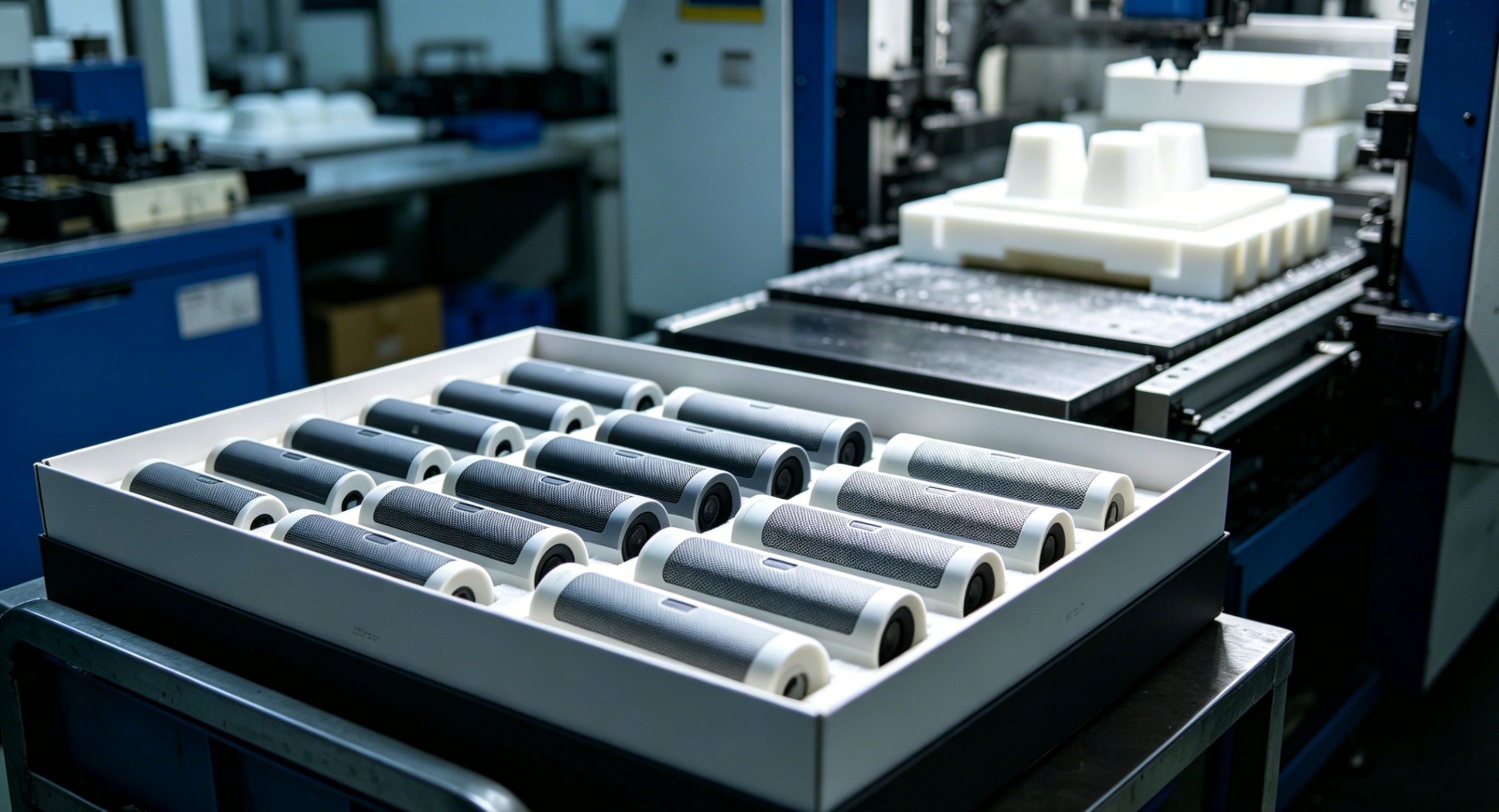
Polycarbonate parts can perform well when geometry, material grade, drying, gate position, polishing, inspection, and packing protection are reviewed before tooling. Clear parts and visible surfaces need especially careful acceptance standards.
Part types
Common PC injection molded parts
Transparent covers and lenses
Light covers, windows, display covers, protective shields, guards, and clear or tinted molded parts.
Electronics housings
Control boxes, equipment covers, sensor housings, battery covers, and flame-retardant enclosure parts when required.
Protective and safety parts
Machine guards, impact covers, equipment shields, protective panels, and durable transparent parts.
Functional brackets and structural parts
Brackets, supports, frames, mounting parts, clips, high-strength covers, and heat-resistant components.
Grade selection
Clarify the PC grade before mold design
A quote that only says “PC” can hide important assumptions. The grade affects transparency, impact, flame rating, UV resistance, heat performance, shrinkage, mold temperature, processing window, and inspection requirements.
- General-purpose PC for tough functional molded parts.
- Optical or high-clarity PC when transparency and surface quality are important.
- UV-stabilized PC when outdoor exposure or light exposure matters.
- Flame-retardant PC when the product has a documented electrical or safety target.
- Glass-filled PC or PC blends when stiffness, heat, or dimensional stability need review.
- PC-ABS when the buyer needs a balance of PC toughness and ABS processability or appearance.
Mention these early
- Transparent, translucent, opaque, or tinted requirement.
- Flame rating target and wall thickness, if required.
- Impact, heat, UV, or chemical exposure.
- Polish, texture, printing, coating, or hard-coat target.
- Critical fit, screw torque, insert, or assembly requirement.
Design review
PC injection molding DFM checks
PC can show stress, sink, flow marks, bubbles, black specks, and cracking if the design and process window are not reviewed early. DFM should connect the plastic grade, wall thickness, gate, polish, assembly load, and inspection standard.
Drying and material handling
PC is moisture-sensitive, so drying, material storage, regrind limits, and clear-part cleanliness need attention.
Wall thickness and sink
Review thick sections, sudden transitions, ribs, bosses, flow length, cooling, and appearance surfaces.
Stress and sharp corners
Check radii, notches, snap features, screw bosses, inserts, and assembly loads to reduce cracking risk.
Gate and weld line
Plan gate type, flow direction, weld line position, gate mark, venting, and transparent surface visibility.
Polish and visible surfaces
Define A-surfaces, SPI polish or texture target, haze, scratches, black specks, flow marks, and packing protection.
Assembly features
Review screw torque, inserts, clips, mating parts, ultrasonic welding, adhesive, and stress after assembly.
Surface and secondary operations
PC surface finish, transparency, printing, and assembly
| Requirement | What to specify | Why it matters |
|---|---|---|
| Transparent surface | Clarity, tint, haze limit, scratch limit, black speck limit, A-surface map. | Clear parts reveal defects quickly; mold polish, handling, and packing must match the target. |
| Texture or matte finish | Texture reference, gloss target, visible surface, draft angle. | Texture can hide minor marks but changes draft, release, and appearance expectations. |
| Printing or labeling | Artwork, color, location, durability, cleaning method. | Ink, label, and surface selection should be tested against the use environment. |
| Coating or hard coating | Scratch resistance target, optical target, coating area, sample standard. | Coating adds process risk and should be specified before mold and surface review. |
| Screws, inserts, or welding | Torque, insert size, boss design, weld target, mating part, assembly sequence. | PC stress sensitivity makes assembly design and torque control important. |
T1 and production quality
PC molded part inspection checklist
| Check item | What to inspect | Buyer note to define |
|---|---|---|
| Dimensions and fit | Critical dimensions, flatness, holes, assembly gap, thread or insert fit. | 2D drawing, tolerance, mating parts, inspection method. |
| Transparent appearance | Haze, scratches, flow marks, bubbles, black specks, gate mark, weld line. | Approved sample, A-surface map, viewing distance, defect limits. |
| Stress and cracking risk | Screw boss cracking, insert area, snap fit stress, sharp corners, post-assembly stress. | Torque target, load case, chemical contact, stress test method. |
| Material and grade | PC grade, color, transparency, flame-retardant target if required, UV need. | Specified resin grade or performance target, not only “PC”. |
| Packing protection | Scratches, rubbing, dust, deformation, label errors, carton damage. | Bagging, protective film, stacking direction, destination country. |
RFQ checklist
What to send for a PC injection molding quote
1. Part files
3D CAD, 2D drawing, photos or sample, part revision, and key dimensions.
2. PC requirement
PC grade if known, color, transparency, flame target, UV, heat, impact, or “need material advice”.
3. Surface and assembly
A-surfaces, polish, texture, scratches, printing, coating, inserts, screws, welding, or labels.
4. Quantity and logistics
Prototype or T1 needs, annual quantity, batch quantity, packing, destination country, and timeline.
Related pages
Useful pages for PC molded part buyers
If PC is only one material option, these pages help compare manufacturing risks, DFM, tolerances, surfaces, quality checks, and RFQ details before sending drawings.
Buyer note
PC project facts to confirm before quoting
For PC molding work, Plastic Make Co reviews the drawing, resin target, surface requirement, tolerance notes, assembly load, inspection standard, packing need, and RFQ quantity before confirming the quotation path. If a certification, exact grade, special test report, or regulated-use requirement is needed, include it in the RFQ package so it can be checked instead of assumed.
Reviewed by: Plastic Make Co project review team
This page is written as buyer guidance, not as a claim of certification, machine count, customer list, export volume, fixed lead time, MOQ, or guaranteed result.
FAQ
PC injection molding questions buyers ask
Is PC good for transparent injection molded parts?
PC can be used for transparent or tinted parts, but clarity depends on grade, drying, gate location, mold polish, handling, and defect limits. If the part has optical requirements, describe them clearly in the RFQ.
Why do PC parts crack near screws or inserts?
PC is tough, but stress concentration, sharp corners, over-tightened screws, chemical exposure, or poor boss design can create cracking risk. Boss design, torque, radius, material grade, and assembly sequence should be reviewed early.
Can PC be flame retardant?
Flame-retardant PC grades are available, but the buyer should specify the target rating, wall thickness, product requirement, and any documentation needs. Do not assume a flame rating from a generic PC request.
When should I choose ABS or PC-ABS instead of PC?
ABS may be better for cost-sensitive indoor parts with good appearance and easier finishing. PC-ABS may be reviewed when heat and impact need to improve while keeping better processability than pure PC for some housings.
Start the review
Send PC part drawings for DFM and quotation
Attach CAD, drawings, PC grade if specified, transparency or flame target, surface requirements, assembly notes, critical dimensions, quantity, packing needs, and destination country.
Ready to check your plastic part?
Send drawings for an injection molding quote
For faster review, include CAD files or photos, material, quantity, color, finish, destination country, and any critical fit or appearance requirements.