Anonymous case study
Electronics Enclosure Injection Molding Case Study
This case study shows how Plastic Make Co reviews an electronics enclosure project where internal component clearance, screw bosses, surface finish, material selection, inspection, and export packing all affect buyer approval.
Project snapshot
Enclosure details that had to be clarified before tooling
| Part type | Two-piece electronics enclosure with internal ribs, screw bosses, openings, and cosmetic outside surfaces. |
|---|---|
| Process | Injection mold making, T1 sample review, assembly fit check, surface inspection, production packing. |
| Key requirement | Stable fit around PCB and hardware, controlled screw boss design, clean exterior finish, and protected packing before shipment. |
| Main risk | Sink near bosses, warped covers, tight or loose assembly, visible gate marks, texture mismatch, and scratched surfaces during packing. |
| Status | Anonymous project example used to show the review process; no customer name, order volume, or confidential design is disclosed. |
Buyer challenge
The enclosure had to hold internal components, close cleanly, protect the electronics, and still look acceptable on visible surfaces. A quote based only on outside dimensions would miss the real engineering risk.
What made it risky
Internal bosses and ribs can create sink marks on the outside face. Openings, clips, screw posts, and parting lines also affect both mold construction and assembly repeatability.
Review goal
The review goal was to turn the enclosure from a visual shell into a moldable, inspectable, packable assembly with clear approval points for T1 samples and production.
DFM and tooling review
The enclosure was reviewed as an assembly, not only as two molded shells
Electronics enclosure projects usually involve more than a top and bottom cover. The DFM review connected wall thickness, PCB envelope, openings, bosses, ribs, fasteners, material, surface texture, and packing expectations.
- Wall thickness, rib height, screw boss design, and sink risk near visible exterior faces.
- PCB clearance, connector openings, button holes, cable exits, LED windows, and mating parts.
- Draft angle, texture direction, parting line, gate position, ejector marks, and weld line visibility.
- Threaded inserts or self-tapping screws, torque expectations, boss cracking risk, and assembly sequence.
- Surface finish, color, packing protection, carton marks, and inspection photos before shipment.

Photo evidence
Electronics enclosure photo evidence buyers should review
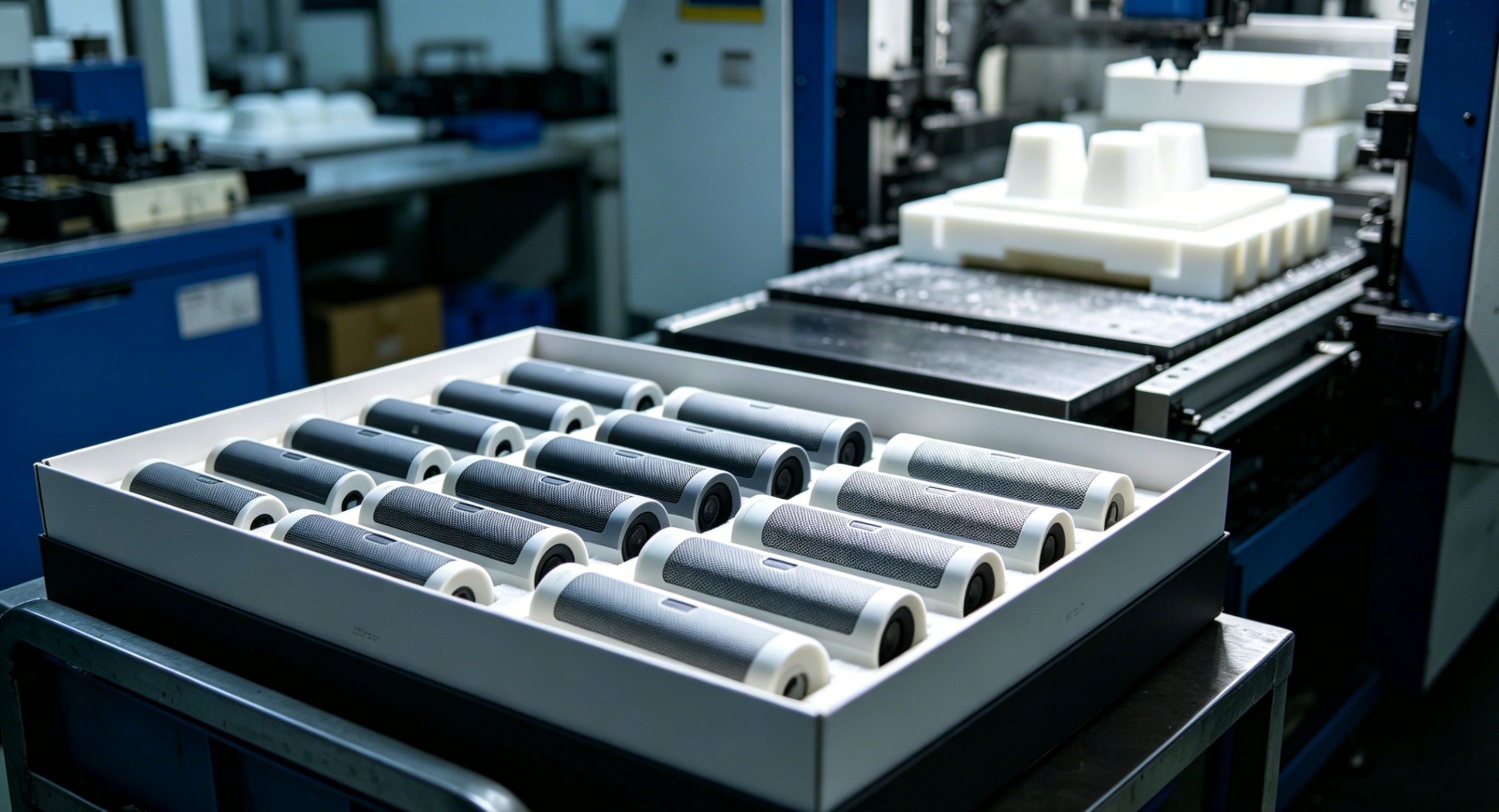
A useful overseas-buyer case should include more than text. Review product, structure, mold or T1, inspection, and packing photos so the project discussion stays connected to real manufacturing checkpoints.



T1 sample feedback
Sample approval focused on fit, surface, and fastening details
| Review item | What was checked | Why it matters to the buyer |
|---|---|---|
| Assembly fit | Top and bottom cover fit, screw alignment, internal clearance, opening alignment, and gap consistency. | A housing can look correct alone but fail when PCB, screws, or mating parts are assembled. |
| Exterior appearance | Texture, color, gloss, flow marks, weld lines, gate marks, scratches, and sink near bosses. | Visible surfaces affect buyer acceptance, especially for branded or user-facing products. |
| Fastening points | Boss strength, screw torque, insert position if used, cracking, stripped threads, and post height. | Fasteners decide whether repeated assembly and field use are practical. |
| Packing condition | Bagging, rub marks, surface protection, carton layout, labels, and mixed-part prevention. | A good molded enclosure can still be rejected if visible faces are scratched during shipping. |
Production and inspection
Inspection connected cosmetic approval with functional fit
Dimensional check
Critical holes, screw boss positions, outside dimensions, opening size, flatness, and assembly gaps.
Appearance check
Color, texture, gloss, flow marks, weld lines, gate marks, scratches, sink, and visible parting line.
Assembly check
Cover fit, screw torque if specified, hardware fit, insert position, button or connector alignment.
Packing check
Protective bagging, carton arrangement, label accuracy, surface rubbing, and pre-shipment photos.
Result
The buyer had clearer approval points before batch production
The case helped organize the enclosure review into clear checkpoints: DFM risk, T1 sample fit, visible surface standard, fastening review, and packing condition. That structure makes production discussions easier for an overseas buyer.
Have a similar enclosure?
Send enclosure drawings for DFM and quotation
Attach CAD files, 2D drawings, PCB envelope, material, color, surface finish, inserts, hardware, quantity, inspection needs, and destination country.
Ready to check your plastic part?
Send drawings for an injection molding quote
For faster review, include CAD files or photos, material, quantity, color, finish, destination country, and any critical fit or appearance requirements.