PP injection molding manufacturer in China
PP Injection Molding Manufacturing Partner in China
Plastic Make Co provides custom PP injection molding for lightweight plastic parts that need chemical resistance, low density, flexible snap fits, living hinges, or cost-sensitive production. We review PP grade, shrinkage, warpage, hinge design, surface requirements, inspection, and packing before mold making.
Material fit
When PP is a practical injection molding material
PP is a practical resin for many lightweight, chemical-resistant, flexible, and cost-sensitive molded parts. It is not ideal for every cosmetic, high-stiffness, or high-temperature requirement, so the buyer should describe the use environment clearly.
| PP is often suitable for… | Buyer benefit | What to confirm | Risk to review |
|---|---|---|---|
| Caps, lids, closures, and containers | Lightweight, chemical-resistant, practical for repeat production. | Sealing target, fit, thread, snap, hinge, food-contact or medical requirement. | Shrinkage, warpage, sealing edge flash, dimensional repeatability. |
| Living hinge and flexible covers | PP can support hinge fatigue better than many rigid plastics. | Hinge thickness, opening angle, cycle expectation, flow direction. | Hinge cracking, weak flow, gate position, material grade mismatch. |
| Clips, snap fits, and flexible tabs | Good fatigue resistance and flexibility for repeated deflection. | Assembly force, repeat use, mating part, tolerance, operating temperature. | Creep, stress whitening, snap breakage, loose fit after use. |
| Chemical-resistant trays and housings | Useful where moisture and many chemicals are a concern. | Chemical list, temperature, exposure time, cleaning process. | Chemical compatibility, stiffness, heat resistance, long-term creep. |
| Thin-wall or cost-sensitive molded parts | Can support efficient molding when geometry and flow are suitable. | Wall thickness, flow length, gate location, quantity, packing method. | Short shot, warpage, sink, uneven shrinkage, ejection marks. |
Production example
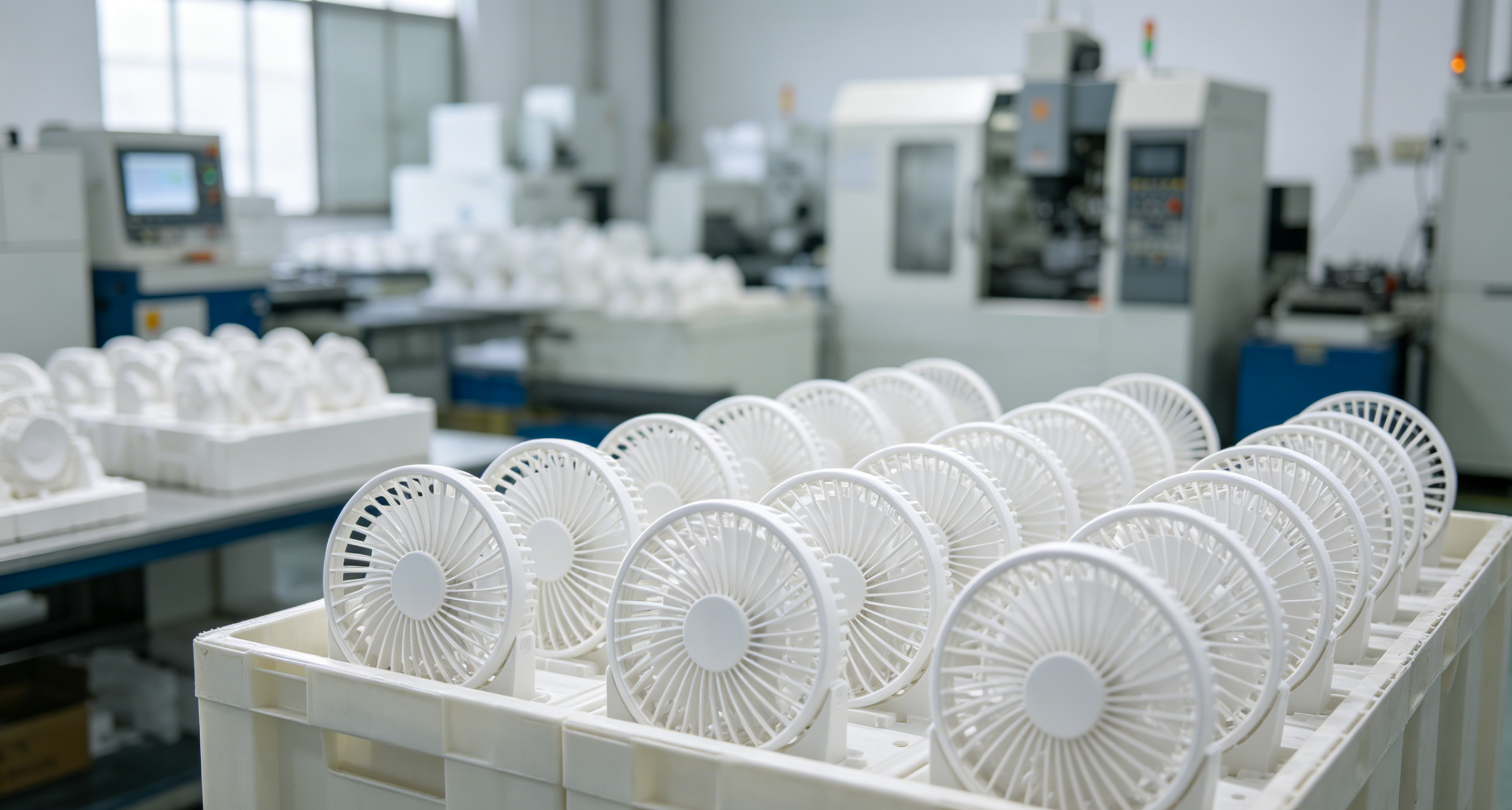
PP molded parts in batch production
PP molded parts can support lightweight consumer and functional components when material grade, geometry, shrinkage, and production expectations are reviewed before tooling.
Part types
Common PP injection molded parts
Caps, lids, and closures
Threaded caps, snap lids, hinged covers, container closures, and packaging-related components.
Living hinge parts
Flip-top covers, flexible lids, folding tabs, integral hinges, and repeated-open plastic features.
Clips and snap-fit parts
Flexible clips, retaining tabs, protective covers, brackets, and assembly components.
Medical, lab, and industrial parts
Trays, holders, chemical-resistant parts, protective housings, and lightweight functional components.
Grade selection
Clarify the PP grade before mold design
PP grade choice affects stiffness, impact, hinge performance, shrinkage, warpage, temperature resistance, and compliance. A quote that only says “PP” often needs assumptions, especially for living hinges, medical-related parts, food contact, or dimensional fit.
- PP homopolymer for higher stiffness in many general molded parts.
- PP copolymer when improved impact resistance is needed.
- Random copolymer PP for selected clarity or impact needs, depending on application.
- Filled PP, such as talc-filled or glass-filled grades, when stiffness and dimensional stability need review.
- Food-contact, medical-grade, UV-stabilized, or flame-retardant PP only when the requirement is real and documented.
Mention these early
- Living hinge cycle expectation.
- Chemical exposure and cleaning method.
- Food-contact, medical, or regulatory target.
- Stiffness, impact, heat, or UV requirement.
- Critical fit, snap force, or sealing requirement.
Design review
PP injection molding DFM checks
PP has higher shrinkage than many common engineering plastics, so mold design and part geometry need careful review. Warpage, hinge performance, snap-fit behavior, and assembly fit should be checked before tooling and during T1 sample review.
Shrinkage and warpage
Review wall balance, ribs, gate location, flow direction, cooling, and asymmetric geometry.
Living hinge design
Check hinge thickness, flow direction, gate position, radius, opening angle, and cycle testing method.
Snap fits and clips
Review deflection, stress whitening, assembly force, creep, mating part tolerance, and repeat use.
Gate and ejection
Plan gate marks, weld lines, ejection marks, thin-wall filling, and part removal without deformation.
Sealing and fit
Review thread fit, snap closure, sealing lip, flatness, compression, and mating component tolerance.
Surface and labeling
PP has low surface energy, so printing, labeling, bonding, or painting may require treatment or special review.
Surface and secondary operations
PP printing, labeling, welding, and assembly need early review
| Requirement | What to specify | Why it matters |
|---|---|---|
| Pad or silk printing | Artwork, print location, color, durability, treatment requirement. | PP may need corona, flame, plasma, or primer treatment for adhesion. |
| Labels or adhesive bonding | Label material, adhesive type, surface texture, use environment. | Low surface energy can cause label lifting or weak bond if not tested. |
| Ultrasonic or heat welding | Weld design, strength target, sealing target, sample test method. | Joint design should be reviewed before mold making, not after T1. |
| Threaded inserts or screws | Screw type, boss design, torque, insert method, pull-out expectation. | PP flexibility and creep can affect long-term fastening performance. |
| Color and texture | Color chip, texture reference, gloss target, visible surface limits. | Texture, shrinkage, and color consistency should be checked at T1. |
T1 and production quality
PP molded part inspection checklist
| Check item | What to inspect | Buyer note to define |
|---|---|---|
| Dimensions and warpage | Critical dimensions, flatness, roundness, thread fit, assembly gap. | 2D drawing, tolerances, mating parts, measurement method. |
| Living hinge performance | Opening angle, hinge whitening, cracking, cycle performance, closure feel. | Cycle target, hinge test method, sample count. |
| Snap and closure function | Assembly force, retention, looseness, repeated use, stress whitening. | Mating part, force target, use cycle, acceptance limit. |
| Surface and molding defects | Sink marks, flow marks, weld lines, short shot, gate marks, ejector marks. | A-surface map, defect limits, color and texture standard. |
| Packing protection | Deformation, rubbing, hinge stress, mixed parts, carton or label errors. | Bagging, stacking direction, carton marks, destination country. |
RFQ preparation
What to send for a PP injection molding quote
1. Part files
3D CAD, 2D drawing, current sample photos, mating parts, and assembly notes.
2. PP requirement
PP grade if specified, color, chemical exposure, food/medical target, UV, or “need material advice”.
3. Functional needs
Living hinge, snap fit, sealing, closure force, thread fit, chemical resistance, or flexibility target.
4. Commercial scope
Prototype quantity, first batch, annual forecast, inspection needs, packing, and destination country.
Related support
Useful pages for PP molded part buyers
Use these guides to compare materials, prepare DFM notes, define tolerance and surface requirements, and review T1 samples before production.
FAQ
PP injection molding questions buyers ask
Is PP good for living hinges?
PP is often used for living hinges because it can handle repeated flexing when the grade, hinge thickness, flow direction, and gate location are designed correctly. T1 testing should confirm hinge performance.
Why do PP parts warp more easily?
PP has relatively high shrinkage. Uneven wall thickness, poor gate location, unbalanced ribs, asymmetric geometry, and cooling differences can increase warpage risk.
Can PP parts be printed or painted?
PP can be printed or labeled, but adhesion is harder than with ABS because PP has low surface energy. Surface treatment, primer, material choice, and durability tests should be reviewed early.
When should I choose ABS instead of PP?
ABS may be better for indoor parts that need better cosmetic surface quality, painting, printing, stiffness, and dimensional stability. PP may be better for chemical resistance, low density, living hinges, and flexible snap features.
Ready for review?
Send PP part drawings for DFM and quotation
Attach CAD, drawings, PP grade if specified, color, hinge or snap-fit requirements, chemical exposure, critical dimensions, quantity, packing needs, and destination country.
Ready to check your plastic part?
Send drawings for an injection molding quote
For faster review, include CAD files or photos, material, quantity, color, finish, destination country, and any critical fit or appearance requirements.