When you are preparing one custom plastic part, the most useful next step is not a generic list of molding terms. It is a clear project brief: what the part must do, what information is already fixed, and what still needs discussion before a quote.
This page is for engineering, sourcing, and product teams working from a CAD file, drawing, sample, photo, or early concept. Use it to prepare the material, quantity, finish, critical fit, appearance, and approval information that makes a custom plastic parts RFQ easier to discuss.
For projects that need a broader stage-by-stage molding path, review how to choose the injection molding route for your project stage.
Custom Plastic Parts We Support
| Part type | Common concerns | Useful RFQ details |
|---|---|---|
| Housings and enclosures | Fit, screw bosses, snap joints, surface finish, color, and assembly. | Assembly drawings, mating parts, visible surface notes. |
| Clips, brackets, and functional parts | Strength, flexibility, creep, dimensional stability, and repeated use. | Load direction, use environment, critical dimensions. |
| Caps, covers, knobs, and fittings | Appearance, texture, grip, fit, and packing protection. | Color, finish, sample photos, packaging needs. |
| Insert molded parts | Insert position, pull-out strength, alignment, and molding temperature. | Insert drawings, metal material, tolerance, assembly use. |
| Overmolded parts | Bonding, softness, sealing, grip, and material compatibility. | Hard substrate, soft material requirement, touch area. |
Prepare One Part for a Useful Quote
Start with the information that is fixed: a drawing, CAD model, sample, or marked-up photo; the quantity; and any dimensions, surfaces, or interfaces that need special attention in an RFQ. Then separate open questions from fixed requirements. If material, texture, or an interface is not final, mark it for discussion rather than assuming it is settled.
This distinction reduces hidden assumptions in the RFQ and keeps the discussion focused on one specific part. The buyer RFQ checklist below groups the available information into part data, production target, material and finish, and quality expectations.
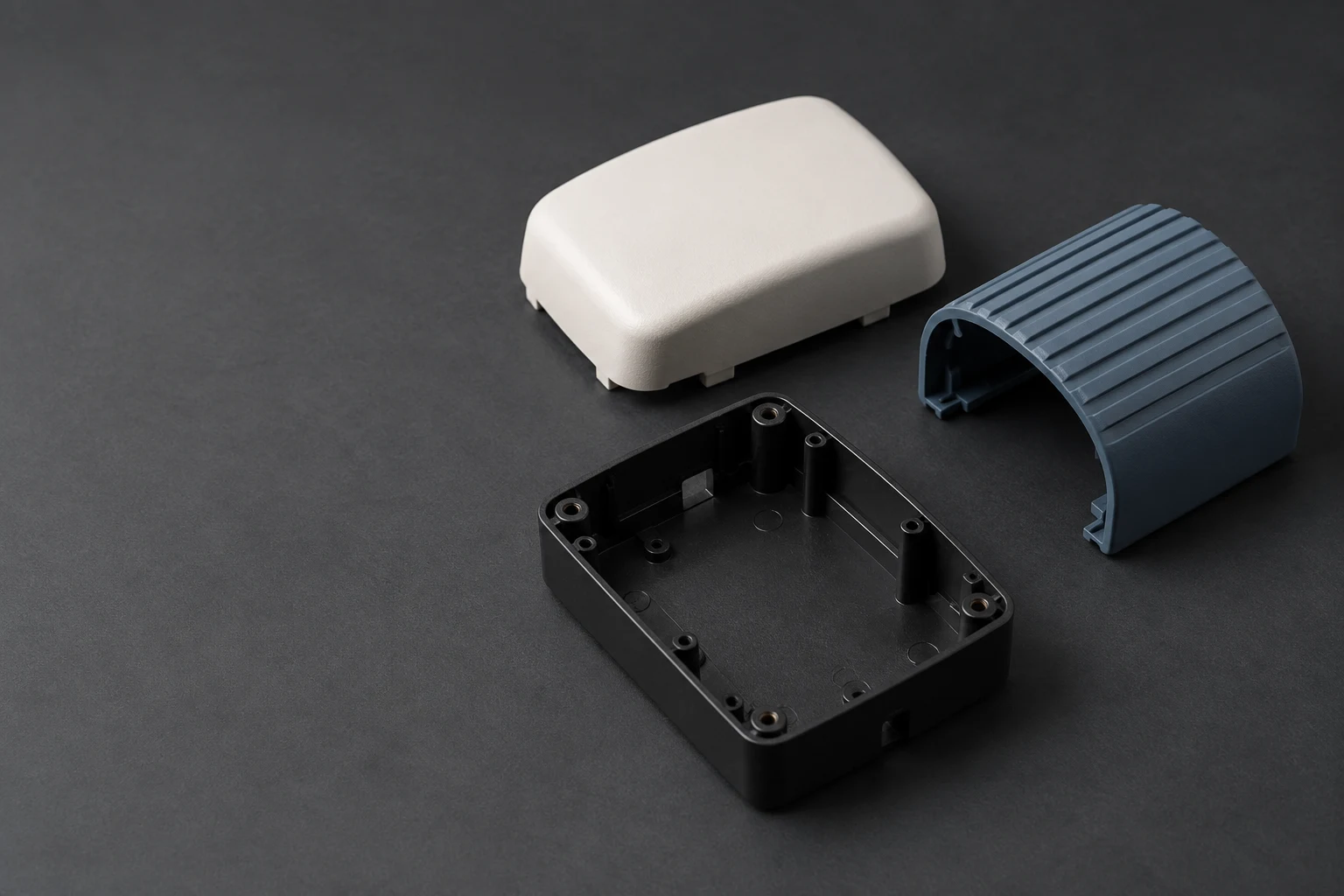
- RFQ review: check drawings, CAD, quantity, material, finish, and project stage.
- DFM feedback: review wall thickness, draft, ribs, bosses, gates, parting line, and visible surfaces.
- Mold planning: confirm tooling route, cavity count, steel choice, runner type, and sample expectations.
- T1 sample review: check fit, dimensions, color, surface, flash, sink marks, warpage, and assembly use.
- Production and packing: follow approved samples, inspection requirements, packing method, and export readiness.
Materials and Finishing
Common materials include ABS, PP, PC, PA, POM, PE, PMMA, TPE, TPU, PBT, PET, and glass-filled grades. The correct choice depends on strength, heat, flexibility, appearance, chemical exposure, UV exposure, and assembly requirements.
- ABS: common for housings, covers, and parts needing balanced processability and appearance.
- PP: useful for lightweight parts, living hinges, chemical resistance, and cost-sensitive applications.
- PC: used when impact strength, clarity, or heat resistance is important.
- PA/Nylon: useful for strength and wear resistance, often with glass-filled options.
- TPE/TPU: used for soft-touch, grip, sealing, or flexible overmolded areas.
Finishing can include texture, polishing, painting, printing, inserts, welding, and simple assembly when required. For a deeper material review, see the plastic material selection guide.
Quality Checks for Custom Parts
Quality control depends on the part function. Appearance parts need surface and color review. Assembly parts need fit checks. Functional parts need critical dimension and use-condition review. We can support inspection planning based on buyer drawings and approved samples.
- Dimensional checks for critical features.
- Surface review for scratches, sink marks, flash, color, and texture.
- Assembly checks with mating parts when provided.
- Insert, thread, clip, snap, or sealing checks when relevant.
- Packing review to reduce deformation or transport damage.
Custom Molded Plastic Parts
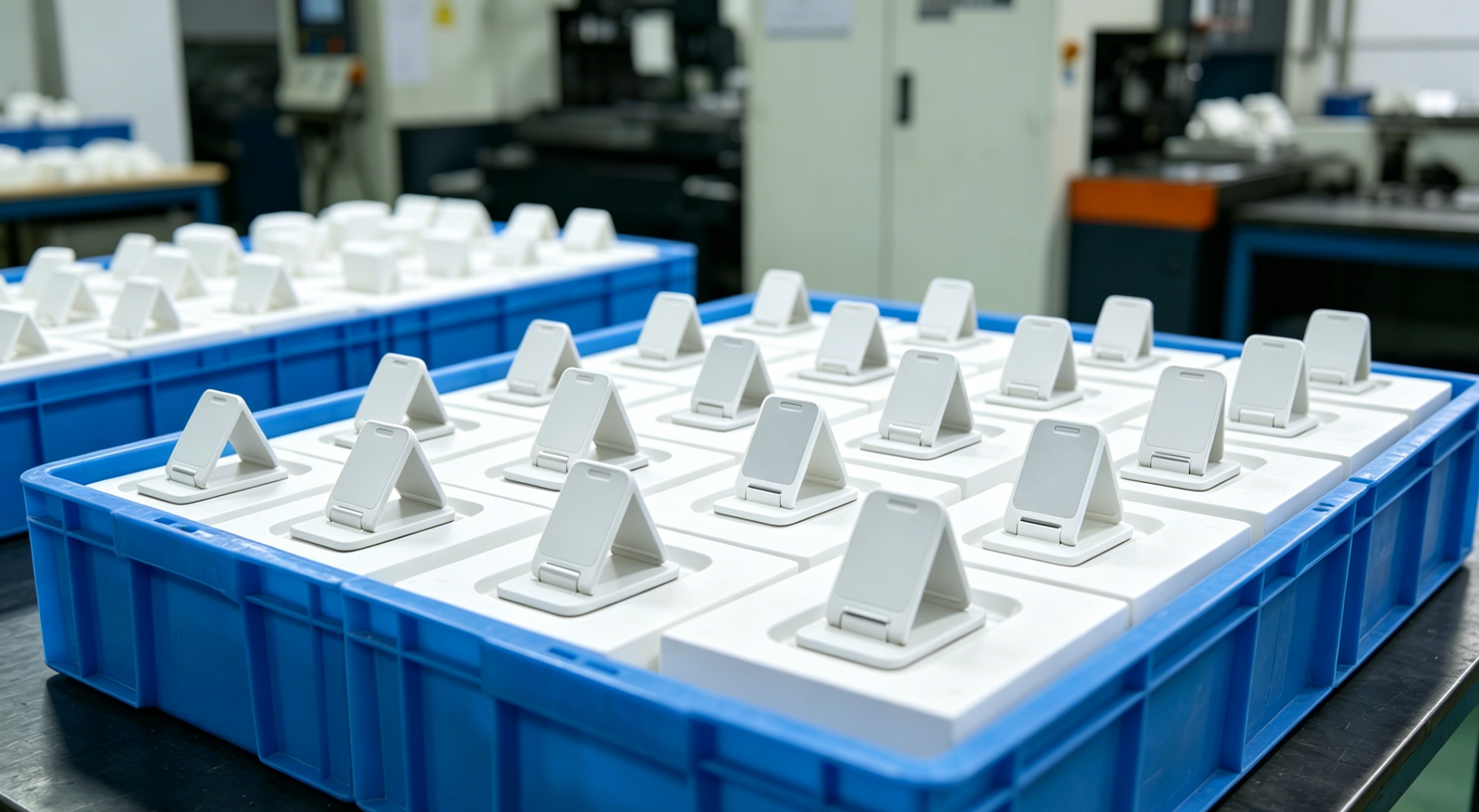
Custom molded parts can be arranged in trays for visual review, quantity checks, surface inspection, and packing preparation.
When sending an RFQ, include photos or samples if the part already exists. This helps clarify texture, color, assembly fit, and visible surface expectations.
RFQ preparation
Buyer RFQ Checklist
A custom plastic part quote is more reliable when the manufacturing team can review the part function, material route, cosmetic surfaces, and approval standard together. Send the essentials first, then mark any open questions clearly.
Part data
3D CAD files, 2D drawings, sample photos, part function, mating parts, and any known critical dimensions.
Production target
First order quantity, annual forecast, expected timeline, destination country, packing needs, and export handoff notes.
Material and finish
Target resin, performance requirement, color, texture, visible surface standard, inserts, painting, or assembly notes.
Quality expectations
Tolerance priorities, appearance limits, fit checks, T1 sample approval rules, and inspection evidence needed before shipment.
To compare the wider sequence from DFM through production release, review Plastic Injection Molding Services.
Buyer questions
Custom Plastic Parts FAQ
Can you quote from a sample or photo?
A sample or photo can support an early review of shape, visible surfaces, color, texture, and assembly fit. For a final mold and part quotation, CAD data or a reverse-engineered drawing is normally needed so tooling, tolerance, and material assumptions can be checked.
Can you help choose plastic material?
Yes. Share the part function, use environment, temperature exposure, stiffness or flexibility needs, color, surface finish, and any assembly or compliance concern. Those details help narrow practical resin options before tooling and production assumptions are fixed.
Can one mold make several parts?
Sometimes. A family mold can be useful for related custom molded parts, but the parts need compatible size, material, cycle expectations, and quality risk. If one part is more difficult to fill or inspect, separate tooling may be the safer route.
Can you support assembly and packing?
Simple assembly, insert installation, packing checks, carton labels, and export-ready packing can be discussed during RFQ review. The best starting point is to send photos, drawings, packing requirements, and any test or appearance standard your buyer needs.
Need a practical quote review?
Send drawings, CAD files, material, quantity, finish, and destination country. We will review the tooling path and the information needed for a reliable injection molding quote.
China Injection Molding Buyer Hub
Review the complete sourcing path for custom plastic injection molded parts in China, from RFQ and DFM to tooling, samples, production, inspection, and export.
Ready to check your plastic part?
Send drawings for an injection molding quote
For faster review, include CAD files or photos, material, quantity, color, finish, destination country, and any critical fit or appearance requirements.